
1. Silicon refractory material
Silicon refractory materials refer to refractory materials mainly composed of SiO2. The main products include silica bricks, amorphous silica refractory materials, and quartz glass products.
Silicon refractory materials are typical acidic refractory materials. Its mineral composition: the main crystal phases are quartz and quartzite, and the matrix is quartz glass phase. Silicon refractory materials have strong resistance to acidic slag, but are strongly eroded by slag; High load softening temperature; Residual expansion ensures that the masonry has good air tightness and structural strength; Wear resistant and have good thermal conductivity; Low thermal stability and low fire resistance limit its wide application. Silicon bricks are mainly used in coke ovens, glass melting furnaces, acid steelmaking furnaces, and their thermal equipment. The automated batching production line for silica brick refractory materials has achieved full process automation from raw material supply to finished product packaging. Through a series of automatic equipment such as automatic feeder, wet vibrating screen, spray drying tower, R19 intensive mixer, roller kiln and automatic brick press, the production line can accurately control the proportioning and mixing process of raw materials to ensure the consistency of silica brick quality.

2. Magnesium refractory material
Magnesia refractory materials refer to refractory materials made from raw materials such as magnesite, seawater magnesia, and dolomite, with periclase as the main crystal phase and MgO content of 80% to 85% or more. Magnesium refractory materials belong to alkaline refractory materials, with good resistance to alkaline substances and high refractoriness. They are the most widely used and important type of refractory material in steelmaking alkaline converters, electric furnaces, iron furnaces, and many non-ferrous metal pyrometallurgical processes. They are also commonly used in high-temperature zones of glass heat storage chambers, cement kilns, and ceramic kilns.
Magnesium refractory products can be divided into two categories: metallurgical magnesia and magnesium products. According to chemical composition and application, it can be divided into metallurgical magnesia, magnesia brick, magnesia silica brick, magnesia alumina brick, magnesia calcium brick, magnesia carbon brick, and other varieties. Its performance is greatly affected by the CaO/SiO2 ratio and impurities. The load softening point and heat shock resistance of high-purity magnesia bricks are much better than those of ordinary magnesia bricks. High refractoriness and good resistance to alkaline slag and iron slag make it an important advanced refractory material. Magnesium products are mostly produced by sintering method, with a firing temperature generally between 1500 and 1800 ℃. In addition, chemical binders can also be added to make unburned bricks and amorphous refractory materials.
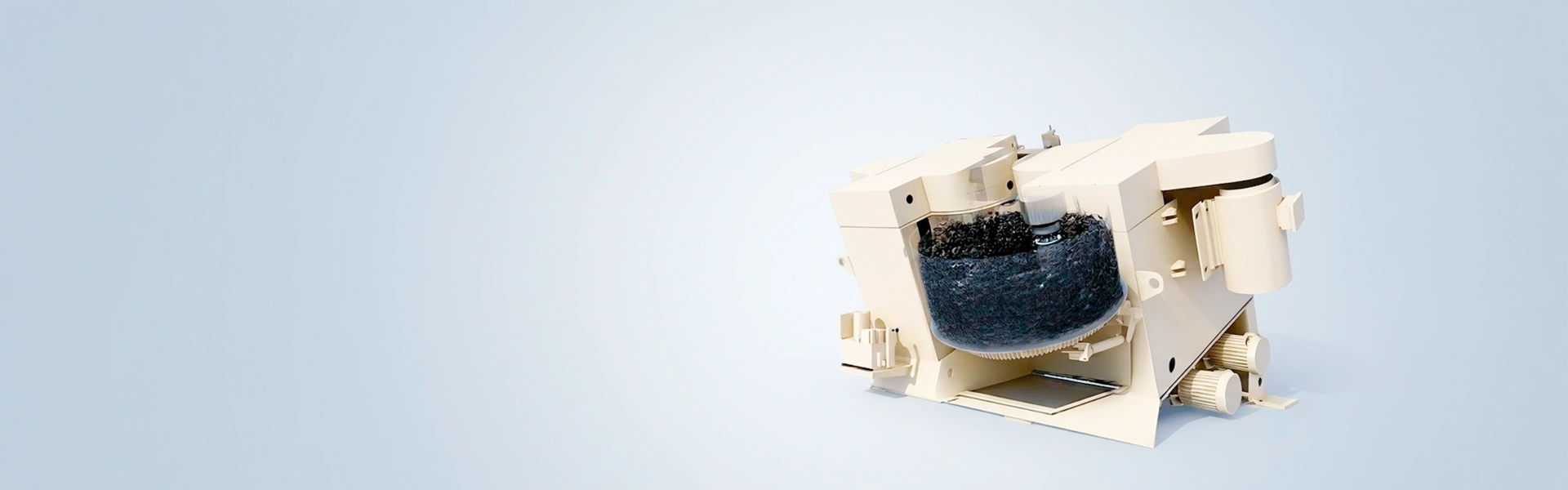
Mixing ingredients is key: weigh and mix particles of different sizes and fine powders according to the formula, add binders, and stir in the refractory mixer for 15-20 minutes to evenly distribute the ingredients.

The molding should be compacted: The mixed material is molded using a friction press or hydraulic press, with a molding pressure generally between 120-200 megapascals. The higher the pressure, the denser the brick blank.
The firing temperature determines the performance: The sintering method requires firing at a high temperature of 1500-1800 ℃. The firing temperature of magnesia alumina spinel bricks is about 1650-1750 ℃, and the insulation time is about 10 hours. If the bricks are not fired, they can achieve room temperature strength through binders.
Electric melting method is more advanced: Electric melted magnesia is melted at a high temperature of 2800 ℃ or above in an electric arc furnace, and after cooling, it forms large crystalline periclase, which has much stronger resistance to slag erosion than sintered magnesia.
3. Fused refractory material
Melting and casting refractory materials refer to products made by melting raw materials and mixtures at high temperatures and casting them into a certain shape. There are two methods for melting the mixed materials: electric melting method and aluminum thermite method. The electric melting method is to melt the mixture in an electric arc furnace or resistance furnace. The aluminum thermal method uses the heat released by the aluminum thermal reaction (2Al+Fe2O3 → 2Fe+Al2O3+Q) to melt the mixture. The electric melting method is currently the main method for producing fused refractory materials.
There are many types of cast refractory products, and currently the most widely used is cast zirconia corundum brick. Other cast products include cast mullite bricks and cast zirconia mullite bricks; Fused products such as fused alumina bricks, magnesia, spinel, and olivine. Compared with sintered products, cast products have the following characteristics: the product is very dense, with fewer pores and a higher density; High mechanical strength; High temperature structural strength; High thermal conductivity and good slag resistance.
Production process: raw material preparation, processing, processing, melting, casting, heat treatment, and mechanical processing. There are many types of cast refractory products, and it should be noted that planetary mixer have a high cost performance ratio. The most widely used is cast zirconia bricks. Other cast products include: cast mullite bricks, cast montmorillonite bricks, as well as cast products made of quartz, magnesium, spinel, and magnesium olivine. Compared with sintered products, cast products have the following characteristics: dense products, few pores, high density, high mechanical strength, high temperature structural strength, high thermal conductivity, and good slag resistance[
4. Carbon containing refractory materials
Carbon containing refractory materials refer to refractory materials mainly composed of carbides, which belong to neutral refractory materials and are divided into two categories: carbonaceous products, graphite clay products, and carbide refractory products.
Carbon containing refractory materials have high refractoriness (pure carbon has a melting temperature of 3500 ℃, and actually begins to sublime at 3000 ℃. Silicon carbide decomposes above 2200 ℃), good thermal and electrical conductivity, excellent load deformation temperature and high-temperature strength, and better slag resistance and thermal shock resistance than other fire-resistant materials. But these types of products all have the disadvantage of being prone to oxidation.
Carbonaceous products are products made primarily from carbon, using coke, graphite, or heat-treated anthracite as raw materials, and organic materials containing carbon as binders. This type of product includes carbon bricks mainly composed of coke or anthracite, as well as artificial graphite and semi graphite carbon bricks that have been graphitized. Carbonaceous products have good heat resistance, corrosion resistance, high temperature strength, and high temperature thermal conductivity, and are currently mainly used in blast furnaces.
Graphite clay products are refractory materials made from natural graphite as raw material and clay as binder. It has good thermal conductivity, high temperature resistance, does not interact with molten metal, and has low thermal expansion. This type of product includes graphite clay crucibles, distillation tanks, plug bricks for cast steel, spout bricks, and lining bricks for steel barrels. The graphite clay crucible with the highest production and widest application is used for steelmaking and melting non-ferrous metals.
Silicon carbide products are advanced refractory materials produced from silicon carbide (SiC) as raw material. It has good wear resistance and corrosion resistance, high high-temperature strength, high thermal conductivity, low coefficient of thermal expansion, and good thermal shock resistance. In recent years, its application fields have been continuously expanding. Silicon carbide products can currently be used in steel smelting for lining steel drums, nozzles, plugs, blast furnace bottoms and belly, tapping troughs, converter and electric furnace tapping ports, and heating furnaces without water-cooled sliding rails. In the smelting of non-ferrous metals (zinc, copper, aluminum), it is widely used in stills, distillation tower trays, electrolytic cell sidewalls, molten metal pipelines, suction pumps, and melting metal crucibles.
5. Lightweight refractory material
Lightweight refractory materials refer to refractory materials with high porosity, low bulk density, and low thermal conductivity. The characteristics of lightweight refractory materials are porous structure (porosity is generally 40% to 85%) and high thermal insulation. Used as insulation material on industrial kilns and other thermal equipment. Compared with ordinary refractory bricks, it has poor slag corrosion resistance, mechanical strength, and wear resistance, and has a larger volume shrinkage at high temperatures.
According to volumetric density, lightweight refractory materials can be divided into two categories: lightweight bricks and ultra lightweight bricks. Lightweight bricks with a bulk density between 0.3 and 1.3 g/cm3; Ultra lightweight bricks are those with a density below 0.3g/cm3.
According to the operating temperature, lightweight refractory materials can be divided into three categories: low temperature, medium temperature, and high temperature. Low temperature insulation materials are used at temperatures ranging from 600 to 900 ℃; 900~1200 ℃ is a medium temperature insulation material; High temperature insulation materials are used for temperatures exceeding 1200 ℃.
According to the shape of the product, lightweight refractory materials can be divided into two categories: shaped and amorphous. Shaped lightweight refractory bricks include clay, high alumina, silica, and certain pure oxide lightweight bricks; Amorphous lightweight refractory materials, such as lightweight refractory concrete.
6. Amorphous refractory material
Amorphous refractory materials are refractory materials that are directly used without forming or firing, composed of reasonably graded granular and powdery materials and binders. Usually, the granular material that makes up this material is called aggregate, the powdered material is called admixture, and the binder is called binder. This type of material has no fixed shape and can be made into slurry, paste, and loose forms, so it is also collectively referred to as dispersed refractory materials. After being uniformly mixed by a RV19 mixer and packaged, this refractory material can be used to form seamless integrated structures, hence it is also known as integral refractory material.

There are many types of amorphous refractory materials, and there are also many classification methods. Generally, they can be divided into alkaline refractory materials, acidic refractory materials, and neutral refractory materials according to their chemical composition and properties; According to their chemical composition, they can be divided into silicon, aluminum silicate, aluminum, magnesium, silicon carbide, aluminum carbon, etc; According to the bonding method, it can be divided into cement bonding, chemical bonding, coagulation bonding, etc; According to the installation method, it can be divided into castable, plastic, ramming material, spray coating, prefabricated parts, etc.
The refractory materials used in the steel industry account for about 70% of the total refractory materials. The main function of refractory materials is to withstand high temperatures, wear and corrosion, protect the integrity of thermal equipment steel structures, and provide better working conditions.