
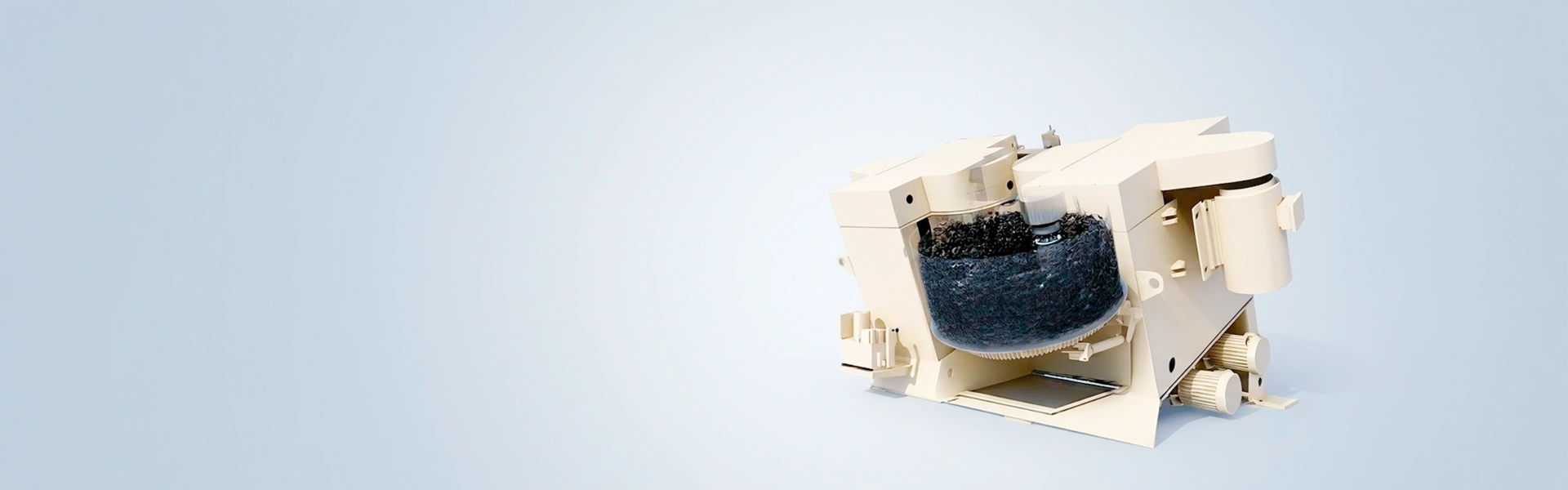

A dry powder mixer is an industrial equipment specifically designed for mixing powders or powders with small amounts of liquid. It is widely used in industries such as building materials, chemicals, and food, and can achieve rapid and uniform mixing of materials.
The dry powder mixer mainly uses composite motion to make the materials roll and mix. The slurry blades and animal materials inside the machine move in both circular and axial directions, forming an instant weight loss state in the overlapping areas, causing the materials to circulate and shear in all directions. Horizontal models are commonly designed with inner and outer double-layer spiral belts. The outer spiral belt pushes the material from both ends to the middle, while the inner spiral belt pushes the material from the middle to both ends, forming convective mixing. The vertical model relies on the rapid rotation of the screw to lift the raw materials from the bottom to the top and then throw them back to the bottom, allowing the raw materials to roll up and down in the bucket. The mixing time is generally 3-8 minutes to complete a single mixing, with high uniformity and minimal residue.
Horizontal paddle mixer has a wide range of applications, with the building materials industry being the main application scenario, including putty powder, dry powder mortar, plastering gypsum, colored cement, etc. The chemical industry is used for mixing dyes, pigments, rubber, and plastic powders. It can also be used in the food and pharmaceutical industries, such as feed additives, health product powders, etc. Different materials require different structures to be selected. For dry powder mortar containing vitrified microbeads, it is recommended to use a horizontal screw belt mixer, as the vertically rising spiral structure has a squeezing effect on the vitrified microbeads, which can affect the insulation performance.
The selection mainly depends on the capacity requirements and material characteristics. The capacity of small equipment ranges from 50L to 500L, while large production lines can handle 1-2 tons/time. The horizontal spiral mixer is suitable for mixing viscous materials and solid-liquid mixtures. The three-axis bidirectional fork hand mixing has higher efficiency and can complete 1-1.5 tons of material mixing in 3-5 minutes. In terms of material, carbon steel can be chosen for ordinary materials, while 304 or 316L stainless steel is recommended for the food and pharmaceutical industry. If automated production is required, a conveyor, storage bin, and automatic packaging machine can be selected to form a production line, which can save 3-4 workers.