
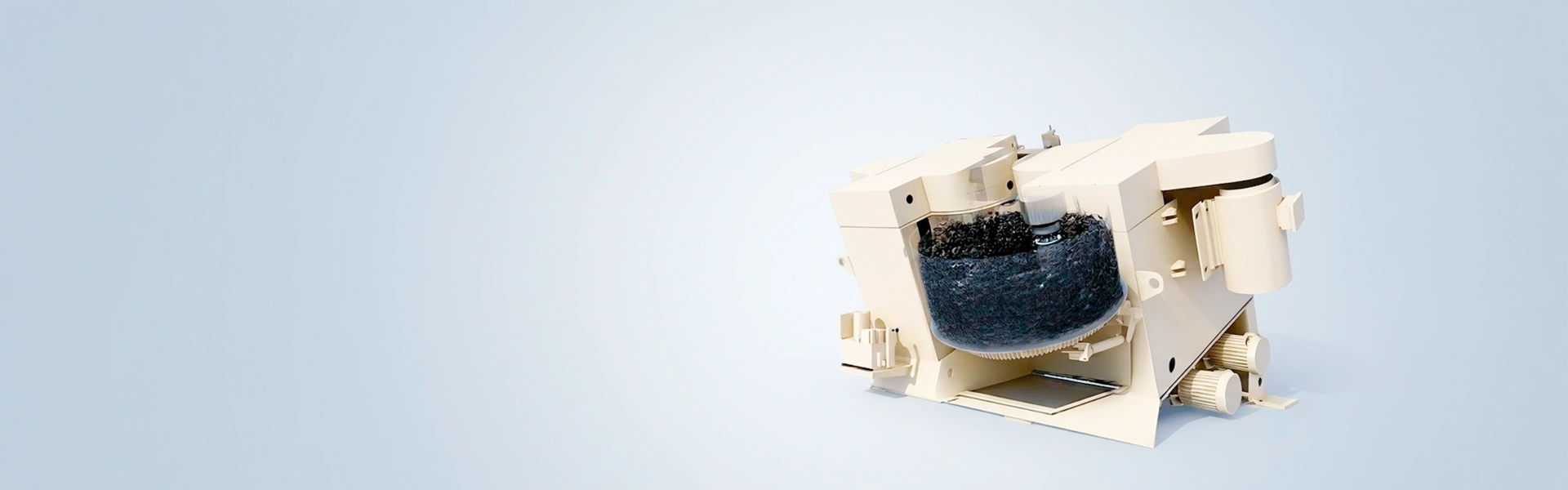
The main purpose of using wear-resistant and refractory materials, the high quality refractory mixer is very important for its application, as lining for circulating fluidized bed boilers is to protect the steel shell of the furnace from erosion and wear caused by the burning materials.
The low-quality coal burned in circulating fluidized bed boilers has a high ash content and large fly ash particle size. The separator separates the coal ash and circulates it for combustion, resulting in a high concentration of fly ash in the flue gas. This leads to collision heat transfer and severe erosion and wear problems of fly ash particles on the heating surface and lining inside the furnace.
The circulating combustion path of the materials burned in a circulating fluidized bed boiler: coal powder (usually with a particle size of 0-10mm) and limestone powder are fed into the fluidized bed combustion chamber (dense phase zone) through a feeder, and the fuel boils and burns in this zone. The flue gas rises, passes through the dilute phase zone, enters the cyclone separator at the inlet, and the coarse particles sink and return to the combustion chamber through the return valve for further combustion. The smoke carrying fly ash rises through the convective flue and enters the external heat exchanger. Refractory materials are mainly lined in the combustion chamber, ceiling, separator inlet, high-temperature cyclone separator, and return valve.
The main purpose of using wear-resistant and refractory materials as lining for circulating fluidized bed boilers is to protect the steel shell of the furnace from erosion and wear caused by the burning materials. The refractory lining is made by high standard castratable materials that mixed by refractory mixer, press machine and others.

The low-quality coal burned in circulating fluidized bed boilers has a high ash content and large fly ash particle size. The separator separates the coal ash and circulates it for combustion, resulting in a high concentration of fly ash in the flue gas. This leads to collision heat transfer and severe erosion and wear problems of fly ash particles on the heating surface and lining inside the furnace.
The circulating combustion path of the materials burned in a circulating fluidized bed boiler: coal powder (usually with a particle size of 0-10mm) and limestone powder are fed into the fluidized bed combustion chamber (dense phase zone) through a feeder, and the fuel boils and burns in this zone. The flue gas rises, passes through the dilute phase zone, enters the cyclone separator at the inlet, and the coarse particles sink and return to the combustion chamber through the return valve for further combustion. The smoke carrying fly ash rises through the convective flue and enters the external heat exchanger. Refractory materials are mainly lined in the combustion chamber, ceiling, separator inlet, high-temperature cyclone separator, and return valve. In conclusion Refractory planetary mixer is so important for the lining preparation.