
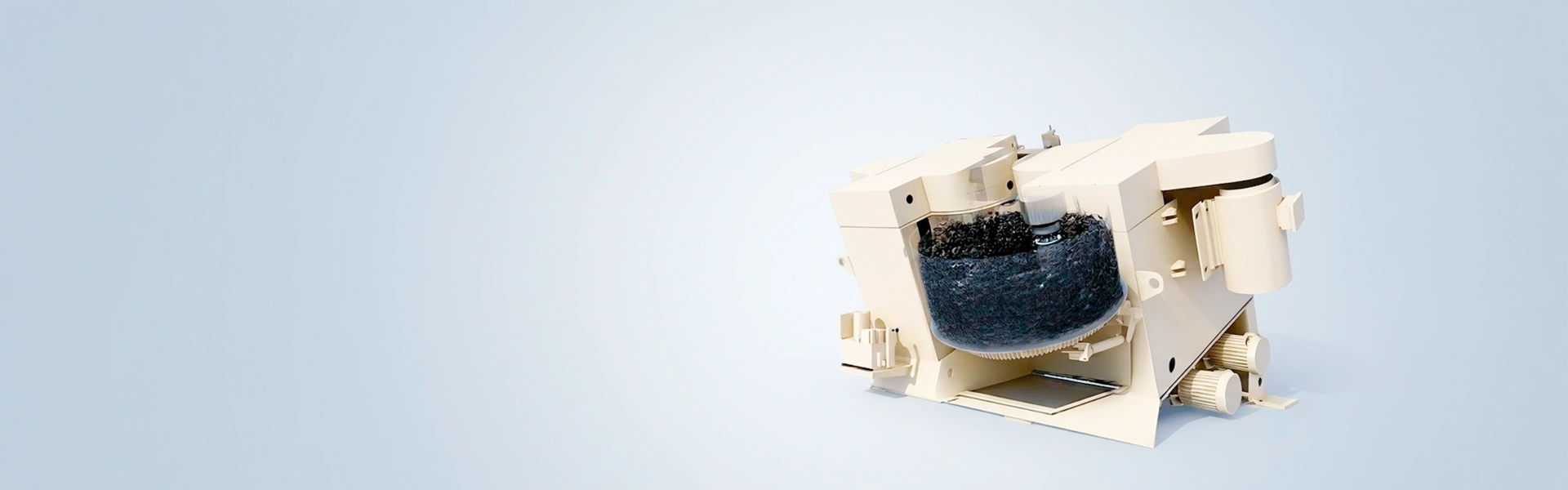
Vertical shaft planetary mixer: The mixing arms perform both revolution and rotation for forced mixing. Widely used for precast components, UHPC and refractory materials, mortar. Never start the machine with materials inside. Cut off power and lock out before maintenance.


|
Item |
Designation |
Qty |
|
1 |
Driving system |
1 |
|
2 |
Bracket |
1 |
|
3 |
Mixing system |
1 |
|
4 |
Mixing trough |
1 |
|
5 |
Water supply |
1 |
|
6 |
Discharging device |
1 |
1. Operating Procedures
1.1 Pre-start Inspection (Daily Check for Each Shift)
Mixing drum cleaning: No caked or leftover materials. Check tightness of bolts on mixing arms, blades and liner plates.
Lubrication and oil level: Reducer gear oil level is normal without leakage; shaft end seal grease supply works normally; hydraulic station oil level is within range.
Clearance check: The clearance between blades and base plate, side scrapers and drum wall is generally 5~10 mm. Excessive clearance causes material accumulation; too small clearance leads to material jamming and abrasion.
Safety devices: Inspection door limit switch, emergency stop button and protective guard are intact. Discharge door is closed with good sealing.
Electrical system: Reliable grounding and intact cables. Jog test run to confirm correct rotation direction and abnormal noise free.
1.2 Feeding and Mixing
Start the machine empty. Do not start with full load or materials in drum, to avoid motor overload burnout and mixing arm breakage.
Feed materials according to formula sequence: generally dry materials (aggregates, powder) first, then water and admixtures. Do not exceed rated capacity. Hard bulk foreign objects are forbidden into the drum.
Mixing: Run for mixing time set by process. Monitor current, abnormal noise and vibration during operation. Stop immediately if abnormality occurs.
Discharging: Open discharge door after mixing completion. In case of power failure, use manual discharging device to empty materials and prevent concrete solidification and locking mixing arms.
1.3 Post-shutdown Work (Each Shift)
Empty all materials. Clean drum interior, blades and discharge door thoroughly to remove solidified materials. Complete cleaning is required when changing formula to avoid cross contamination.
Clean the whole machine exterior. Check wear of blades and liner plates. Inspect shaft end for slurry or oil leakage.
Fill in operation records: running hours, abnormal noise, oil leakage, abnormal current.
Long-term shutdown: Keep drum dry, replenish grease at lubrication points. Take dustproof and moisture-proof measures for electrical components.
2. Maintenance of planetary mixer (Tiered Maintenance)
✅ Daily Maintenance (Each Shift Inspection)
Clean mixing drum; check loose bolts of blades and liner plates.
Inspect shaft end seal, replenish lubricating grease and check slurry leakage (slurry leakage will damage planetary reducer).
Check discharge door sealing strip and hydraulic pipeline for leakage.
Test emergency stop and safety door limit function.
Check reducer and motor for abnormal noise and overheating.
✅ Primary Maintenance (Approx. 200 Working Hours)
Complete all items of daily maintenance.
Check pneumatic/hydraulic discharging system and adjust sealing of discharge door.
Fill lithium base grease into planetary revolution chamber; run rotary support oil pump for 3 minutes.
Re-measure clearance between blades and liner plates, tighten loose bolts.
✅ Secondary Maintenance (First maintenance for new machine: 100h; gear oil replacement every 1200h; overhaul every 4000h)
Reducer: Replace gear oil for the first time after 100h operation of new machine, then replace every 1200h. Emulsified oil indicates failure of shaft end seal; repair immediately.
Planetary shaft bearing: Fill with No.3 lithium base grease monthly via grease gun until new grease comes out from the other side.
Motor bearing: Fill with No.2 lithium base grease monthly.
Hydraulic station: Replace hydraulic oil after 250h for new machine; thereafter replace every 1500h or once a year.
Wearing parts replacement: Replace blades when edge wear exceeds 15 mm, replace liner plates when half worn. Wear will greatly reduce mixing uniformity.
Disassemble and inspect motor, remove dust, check windings and bearings. Inspect coupling and rotary support.
3. Safety Precautions (Top Priority)
Do not open cover or reach into drum during operation. Cut off main power, remove key and lock out, assign special guardian before entering drum for maintenance.
No cleaning, lubrication or maintenance while machine is running.
In case of blockage or overload, shut down and cut off power immediately. Do not repeatedly jog start. Clean materials inside drum manually before re-test.
Safety interlock of inspection door shall not be short-circuited or removed. Emergency stop button must remain effective.
Do not feed over-capacity or oversized materials. Metal foreign objects are strictly prohibited into mixing drum.
4. Troubleshooting
|
Fault |
Cause |
Solution |
|
Hard to start, motor overload |
Caked residue inside drum; blade jamming; low voltage |
Cut off power and clean materials; check blade clearance; inspect power supply |
|
Abnormal noise / overheating of reducer |
Oil shortage, deteriorated oil; damaged bearing; gear wear |
Stop machine, check oil level and oil quality; repair reducer if necessary |
|
Slurry leakage at shaft end |
Worn seal; insufficient lubricating grease |
Replace shaft end seal; replenish grease on schedule |
|
Discharge door cannot close tightly, material leakage |
Worn sealing strip; insufficient hydraulic / pneumatic pressure |
Replace sealing strip; adjust pressure; clean caked materials on discharge door |
|
Severe vibration of whole machine |
Loose anchor bolts; uneven blade wear; uneven foundation |
Tighten anchor bolts; calibrate blades; check foundation level |